
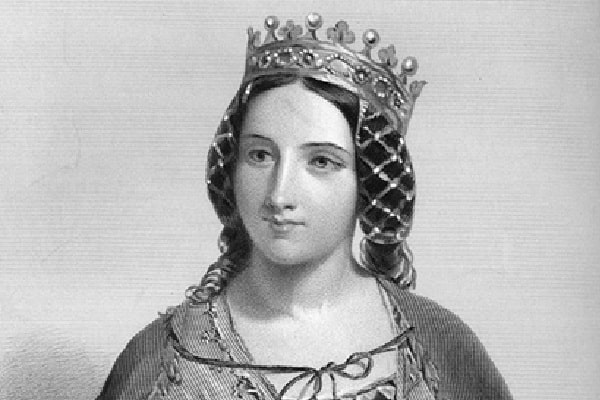
The life of Anne Neville reads like a turning point in English history. She lived during one of the most unstable periods in medieval England, yet her personal story often gets lost behind the power struggles of kings and nobles. When you look closely, her journey reveals how deeply politics shaped the lives of women born into powerful families.
Anne was not just a queen. She was a daughter of one of the most influential men of her time, a pawn in shifting alliances, and eventually the wife of a king whose name still sparks debate. Her life connects directly to the drama of the Wars of the Roses, making her story essential for anyone trying to understand this era.
Early Life and Family Background
Anne Neville was born in 1456, the younger daughter of Richard Neville, known as the Kingmaker. Her father held immense power, often deciding who would sit on the throne. This meant Anne’s childhood was far from ordinary, shaped by politics and ambition from the very beginning.
Her early years were filled with privilege, but also expectation. As a noble daughter, Anne’s future was never truly her own. Marriage would be her role, and that marriage would serve political goals rather than personal happiness.
First Marriage and Lancastrian Alliance
At a young age, Anne was married to Edward of Westminster, the only son of Henry VI. This union was a strategic move during a shifting phase of the Wars of the Roses.
Her father had changed sides, aligning with the Lancastrians, and Anne’s marriage reflected that shift. For Anne, it meant stepping into a dangerous world where loyalties changed quickly and survival was never guaranteed.
The Battle of Tewkesbury and Widowhood
Anne’s life took a dramatic turn after the Battle of Tewkesbury in 1471. Her husband was killed, and the Lancastrian cause collapsed almost overnight.
Still very young, Anne became both a widow and a political prize. Her situation was uncertain, and her future depended entirely on those who held power at the time.
Marriage to Richard III
After her capture by Yorkist forces, Anne’s path led her to Richard III. He sought to marry her, partly because of her inheritance and partly to strengthen his position.
Their marriage in 1472 made Anne Duchess of Gloucester. While historians debate whether their relationship included real affection, this period appears more stable compared to her earlier life.
Richard was loyal to his brother, Edward IV, and governed the north effectively. Anne’s role during this time was quieter, but still important within the structure of noble life.
Motherhood and Life as Duchess
Anne and Richard had one son, Edward of Middleham. His birth secured their family’s future and gave Anne a central role in the continuation of the royal line.
For a brief time, her life seemed settled. She was part of a strong household, with influence and security that had been missing in her earlier years.
Rise to Queenship
The death of Edward IV in 1483 created a political crisis. Richard took the throne, and Anne became queen of England. Her coronation took place at Westminster Abbey, marking the peak of her public life.
As queen, Anne had to represent stability in a tense and uncertain environment. The court was filled with suspicion, and public opinion was divided. Her role was both symbolic and deeply personal.
Personal Tragedy and Loss
In 1484, Anne suffered a devastating loss when her son died. This tragedy affected her deeply and weakened the stability of the royal line.
Without an heir, the future of the monarchy became uncertain. For Anne, this loss was not just political but deeply emotional, marking a turning point in her life.
Illness and Death
Anne’s health declined after her son’s death. By early 1485, she was seriously ill. She died on March 16, 1485, likely from tuberculosis or a similar disease.
Her death came only months before the fall of her husband at the Battle of Bosworth Field. This battle ended Richard III’s reign and marked a major shift in English history.
Anne was buried at Westminster Abbey. Her grave remains simple, reflecting how her story has often been overshadowed by larger events.
Also Read : Diane Rogers Kiel Biography: Family Life, Background, and Her Private Story Explained
Anne Neville and Richard III’s Legacy
Anne’s life is closely tied to the reputation of Richard III. His legacy has been debated for centuries, especially regarding his rise to power and the fate of the princes in the Tower.
As historians revisit Richard’s story, Anne’s role is also being reconsidered. She is no longer seen only as a background figure but as someone who lived through intense political and personal challenges.
Role of Women in the Wars of the Roses
Anne Neville’s story highlights the limited but important role of noblewomen during the medieval period. They were often used to secure alliances, yet they carried the responsibility of maintaining family influence.
Her life shows how women could be both powerless in choice and powerful in impact. Through marriage and lineage, Anne influenced the course of history.
Anne Neville in Literature and Popular Culture
Anne’s story has inspired writers for centuries. She appears in works connected to William Shakespeare, where her character is portrayed with strong emotion and dramatic depth.
These portrayals are not always historically accurate, but they have kept her story alive in public imagination. Modern interpretations aim to present a more balanced and realistic view of her life.
Why Anne Neville Still Matters Today
Anne Neville’s life offers more than historical facts. It gives insight into how personal lives were shaped by political forces. Her experiences reflect the uncertainty of her time and the resilience required to survive it.
Interest in her story continues to grow, especially among those exploring medieval history. Visitors to Westminster Abbey still encounter her legacy, often discovering a story that feels both distant and deeply human.
Anne Neville may not have ruled in her own right, but her influence is undeniable. Her life connects key figures, major events, and the human experiences behind them. Understanding her story brings us closer to understanding the world she lived in.
Final Thoughts
Anne Neville’s journey moves from noble daughter to queen, shaped by forces she could not control. Yet within those limits, she endured loss, change, and responsibility.
Her story reminds us that history is not only about power but also about people. Behind every crown is a life filled with choices, struggles, and moments that define an era.