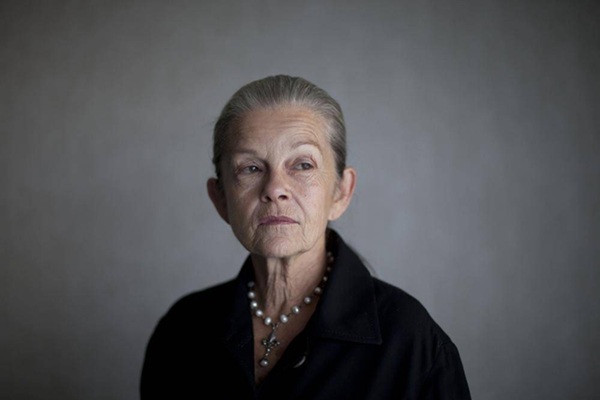
She was nominated for an Academy Award at 27. She turned down Star Trek at 52. And at 83, she is still the subject of cultural conversation among film historians, Star Trek fans, and anyone who ever watched a serious actress hold the screen against Richard Burton and walk away with the better reviews.
Geneviève Bujold is one of the most singular careers in the history of North American cinema. She is also one of the most deliberately private. She does not do social media. She rarely gives interviews. She has not appeared in a new project since 2018. And yet her name keeps surfacing, in retrospectives, in podcasts, in Star Trek lore discussions, and in any serious conversation about what it means for an actress to build a body of work entirely on her own terms.
This is the most complete and current profile of Geneviève Bujold available. Where she is now. What her life looks like in 2026. Her full career, her personal life, her choices, and why she still matters.
Quick Facts: Geneviève Bujold in 2026
Full Name: Geneviève Bujold
Date of Birth: July 1, 1942
Age in 2026: 83 years old
Birthplace: Montreal, Quebec, Canada
Ethnicity: French-Canadian with distant Irish ancestry
Residence: Malibu, California
Current Status: Retired from active acting, living privately
Last Screen Credit: Two Girls (2018), voice role
First Marriage: Paul Almond (director), married 1967, divorced 1974
Long-term Partner: Dennis Hastings (carpenter), 1977 to 2017
Sons: Matthew Almond (with Paul Almond), Emmanuel Claude Bujold (with Dennis Hastings, born 1980)
Net Worth: Estimated $4 million to $6 million
Social Media: None
Where Is Geneviève Bujold Now?
The simplest and most accurate answer is that Geneviève Bujold is in Malibu, living the kind of private life she has always preferred.
She is 83 years old as of 2026. She has not appeared in a new film or television production since providing a voice role in the 2018 Canadian film Two Girls. She does not attend awards ceremonies. She does not give interviews. She maintains no public social media presence of any kind.
This is entirely consistent with who she has always been.
Throughout her career, Bujold was known for choosing projects that interested her artistically while actively resisting the machinery of celebrity. She gave sparse interviews. She left Hollywood repeatedly to make Canadian and European films on her own terms. She walked away from the biggest television opportunity of the mid-1990s, the lead role in Star Trek: Voyager, after a day and a half of shooting because the conditions did not match what she had been promised.
In her 80s, that same self-determination has produced a retirement that is, by all appearances, genuinely chosen rather than imposed. She earned the right to disappear into a Malibu home and watch the ocean if she wants to. And that appears to be largely what she is doing.
Early Life: The Convent That Made Her
Understanding Geneviève Bujold requires starting where she started, which was not a particularly glamorous place.
She was born on July 1, 1942, in Montreal, Quebec, to Laurette, a maid, and Joseph Firmin Bujold, a bus driver. She is of French-Canadian descent with distant Irish ancestry. The family was working class and Catholic, and Bujold spent her first twelve years of schooling at Montreal’s Hochelaga Convent.
She has described those years as oppressive. Opportunities for self-expression were minimal. The convent’s rigid Catholic environment offered almost no outlet for the emotional intensity and fierce independence that would later define her as an actress. She described her childhood feeling as being “in a long dark tunnel trying to convince myself that if I could ever get out there was light ahead.”
Her exit from the convent came through a book. She was caught reading a forbidden novel, Fanny by Marcel Pagnol, and was expelled. It was the best thing that could have happened to her.
She enrolled at Montreal’s free Conservatoire d’Art Dramatique, where she trained in classical French drama. Two months before graduation, she was offered a professional role and quit the school to take it. She never looked back.
The Career That Defined a Generation
The French Years and the Breakthrough
Bujold’s career began in Canadian television and theater in the early 1960s before her trajectory shifted dramatically in 1965 when she joined a theatrical tour to Paris with Montreal company Rideau Vert. There, director Alain Resnais cast her opposite Yves Montand in The War Is Over (1966).
What followed was an extraordinary early-career run through European cinema. She appeared in Philippe de Broca’s cult classic King of Hearts (1966) and Louis Malle’s The Thief of Paris (1967) with Jean-Paul Belmondo. French press called her the Girl of the Day. She won the Prix Suzanne as the Discovery of the Year.
Despite having established herself in France, she returned to Canada where she married director Paul Almond and began making films with him. That marriage and those Canadian films kept her rooted in the work that mattered most to her while Hollywood waited.
Anne of the Thousand Days and the Oscar Nomination
The role that made Bujold an international name was Anne Boleyn in the 1969 British historical drama Anne of the Thousand Days, opposite Richard Burton as Henry VIII.
She was 27 years old. She was not the expected choice for the role. Elizabeth Taylor had been considered for it, given that she was married to Burton at the time. Bujold got it anyway, and what she did with it permanently altered how the role of Anne Boleyn was imagined.
Her performance was fierce, intelligent, and entirely unbowed. She played Anne not as a victim of Henry’s capriciousness but as a strategic, self-possessed woman who understood exactly what was happening to her and refused to be diminished by it. Critic Pauline Kael described her as someone whose performance promised “prodigies ahead.”
She received an Academy Award nomination for Best Actress. She won the Golden Globe for the role. The performance remains one of the defining screen portrayals of Anne Boleyn and is still cited as the benchmark against which every subsequent interpretation is measured.
Hollywood in the 1970s: The Pragmatic and the Personal
Universal Studios wanted to capitalize on her Oscar nomination immediately. She refused to appear in Mary, Queen of Scots (1971), a film she considered too similar to what she had just done. Universal sued her for $450,000. She went to Greece instead and made The Trojan Women (1971) with Katharine Hepburn, Vanessa Redgrave, and Irene Papas.
She eventually settled the lawsuit and agreed to a three-picture deal with Universal, starting with Earthquake (1974) alongside Charlton Heston, which was a box office hit. Over the following decade she appeared in a string of films of varying quality, most notably Obsession (1976) directed by Brian De Palma, Coma (1978) with Michael Douglas, and Tightrope (1984) with Clint Eastwood.
None of those films fully captured what she was capable of. But she found real artistic homes in other places. In the mid-1980s she connected with director Alan Rudolph and appeared in three of his films, including Choose Me (1984), where she played a radio advice host who is a psychological disaster in her own life, a performance of deadpan comic precision that critics adored.
Dead Ringers and the Cronenberg Collaboration
Her performance in David Cronenberg’s Dead Ringers (1988) is frequently cited as her finest work in the latter half of her career. She plays an actress involved with twin gynecologists played by Jeremy Irons, a character the film could have made either ludicrous or villainous but which Bujold rendered as something more complicated and more human than either. Cronenberg himself spoke about how she brought a quality to the role that he had not anticipated and could not have scripted.
The Star Trek: Voyager Incident
This is the episode of Bujold’s career that the internet relitigates most frequently, and it deserves a clear, complete account.
In 1994, Star Trek: Voyager was in pre-production for Paramount. It would be the first Star Trek series since The Next Generation concluded, and the producers wanted to make a statement by casting a female captain for the first time in franchise history. They cast Geneviève Bujold, Academy Award nominee and one of the most respected actresses in North American cinema, as Captain Nicole Janeway.
It was, as Robert Beltran later described, a casting coup. Beltran, who played Commander Chakotay on the show for seven seasons, had wanted to be cast partly because Bujold was involved. He loved her as an actress.
Production began in late 1994. It lasted a day and a half.
The public explanation was that Bujold, a feature film actress, could not adapt to the demanding pace of episodic television, which required memorizing and delivering up to seven pages of dialogue per day on a fast-moving production schedule. Producer Rick Berman described it diplomatically as “immediately obvious it was not a good fit.”
The fuller picture is more nuanced. Before accepting the role, Bujold had conditions: she wanted her hair down, minimal makeup, and to be seen as a captain first and a woman second. She was told those conditions were agreed to. On set, she felt those agreements were not being honored. Crew members later recalled her being withdrawn between takes, running from the set, and expressing that she could not trust anyone around her. On the second day of filming, she went to her trailer in tears. Producer Berman and director Winrich Kolbe went to speak with her. Shortly after, she left.
Kate Mulgrew replaced her, the character’s first name was changed from Nicole to Kathryn at Mulgrew’s suggestion, and Star Trek: Voyager ran for seven seasons.
The story re-entered cultural conversation in 2025 when Star Trek: Lower Decks creator Mike McMahan revealed that bringing Bujold back as a parallel universe version of Captain Janeway in the show’s final season was briefly discussed. McMahan ultimately decided against pursuing it, saying he did not want to be disrespectful to Kate Mulgrew.
Bujold has never publicly commented on the incident at length.
Later Career: Quiet Work on Her Own Terms
After Voyager, Bujold continued working selectively in both Canadian and American independent films.
Highlights include The House of Yes (1997), where she plays the sardonic, precise mother of a dangerously dysfunctional family, a role that earned strong reviews. She appeared in Still Mine (2012) as a wife whose husband builds an illegal home for them as she declines with Alzheimer’s disease, a quiet and deeply felt performance that many critics consider among her most emotionally honest.
Her final screen credit to date is a voice role in the Canadian film Two Girls (2018), where she voiced an adult version of the central character.
Since 2018, there have been no new projects, no announced roles, and no public appearances at film events.
Geneviève Bujold’s Personal Life
Marriage to Paul Almond
Bujold married Canadian film director Paul Almond in 1967. They met while working together in Canadian television and went on to make several films together, including Isabel (1968) and The Act of the Heart (1970). They had one son together, Matthew Almond, who went on to become an actor and director himself. The marriage ended in divorce in 1974.
Almond later described the experience of being married to Bujold with a mixture of admiration and exasperation, noting that he had married Geneviève but lived with all of her characters, observing that from the moment she signed on to a film, a curious internal process began that consumed her completely.
Long-Term Partnership with Dennis Hastings
After her divorce from Almond, Bujold relocated to Los Angeles. A few years later she met Dennis Hastings, a Californian carpenter, when he was doing work at her home in Malibu. They entered a relationship that lasted from 1977 to 2017, forty years together without marriage. They had one son, Emmanuel Claude Bujold, born in 1980.
The relationship between Bujold and Hastings, long-term, private, outside the conventions of Hollywood coupling, was entirely in keeping with the choices she made throughout her life. She settled in Malibu and has remained there.
Life in Malibu
Bujold has lived in Malibu for decades. It is a location that suited her, close enough to the industry she spent her career in but genuinely separate from it, positioned against the Pacific rather than inside the Hollywood ecosystem.
She has described the experience of keeping roles at a distance once they are done, noting that some characters take a year to shed and that she is not comfortable watching her own films. Her approach to acting was always internal and consuming, and the Malibu life represents the counterweight to that intensity: privacy, ocean, family, and the deliberate absence of public performance.
What Geneviève Bujold’s Career Actually Means
The temptation when writing about Bujold is to frame her primarily through the things she refused or the moments she walked away. Universal. Mary, Queen of Scots. Star Trek: Voyager.
But that framing misses the more important story. She refused those things because she had a clear, specific, and consistently applied set of values about what work was worth doing and under what conditions. That clarity is not a liability. It is the engine of the career she actually built.
She made Obsession with Brian De Palma. She made Dead Ringers with Cronenberg. She made Choose Me with Rudolph. She played Anne Boleyn in a way that Richard Burton’s casting could not overshadow. She built a body of work across French, Canadian, and American cinema that required her to function competently in multiple languages, genres, and national contexts simultaneously.
That is not a career of refusals. That is a career of genuine choices made with genuine artistic conviction.
The fact that she is now 83 and living quietly in Malibu without social media or public appearances is the logical endpoint of the same philosophy she applied at 27. She does things when they matter to her. When they stop mattering, she stops doing them.
Also Read : Who Is Hans Gosselaar? A Complete Biography of Mark-Paul Gosselaar’s Father
Geneviève Bujold Net Worth in 2026
Her net worth is estimated at between $4 million and $6 million as of 2026.
That figure reflects a career spanning more than five decades of film and television work, from internationally co-produced art films in the 1960s through major Hollywood studio films in the 1970s and 1980s, through critically acclaimed independent and Canadian productions in the 1990s and 2000s.
She has never been a box office draw in the conventional sense. Her films were not franchise properties or blockbusters, with the partial exception of Earthquake (1974) and Coma (1978). But she worked consistently enough across a long enough period to have accumulated significant career earnings, and she has lived for decades in Malibu, one of the most expensive real estate markets in California, which carries its own implications for asset value.
Frequently Asked Questions About Geneviève Bujold
Who is Geneviève Bujold?
Geneviève Bujold is a French-Canadian actress born July 1, 1942, in Montreal, Quebec. She is best known for her Oscar-nominated performance as Anne Boleyn in Anne of the Thousand Days (1969). Her other notable films include Coma (1978), Dead Ringers (1988), and Still Mine (2012).
Is Geneviève Bujold still alive?
Yes. As of 2026, Geneviève Bujold is alive at 83 years old. She lives quietly in Malibu, California, and has not appeared in any new projects since 2018.
What is Geneviève Bujold doing now in 2026?
She is living privately in Malibu with no current film or television projects announced. She has no social media presence and does not attend public events. Her last screen credit was a voice role in the 2018 Canadian film Two Girls.
Why did Geneviève Bujold quit Star Trek: Voyager?
She left Star Trek: Voyager after a day and a half of filming in 1994. The public explanation was that she could not adapt to the demanding pace of episodic television production. A fuller account suggests she felt the producers had broken agreements they had made with her about her appearance and how her character would be presented. She left in tears on the second day and was replaced by Kate Mulgrew.
What is Geneviève Bujold’s net worth?
Her net worth is estimated at between $4 million and $6 million as of 2026, accumulated across more than five decades of film and television work.
Was Geneviève Bujold ever married?
She was married once, to Canadian film director Paul Almond, from 1967 to 1974. They had one son together, Matthew Almond. She later had a long-term relationship with carpenter Dennis Hastings from 1977 to 2017, with whom she had a second son, Emmanuel Claude Bujold.
What is Geneviève Bujold’s most famous role?
Her most famous and critically celebrated role is Anne Boleyn in Anne of the Thousand Days (1969), for which she received an Academy Award nomination for Best Actress and won the Golden Globe. Many critics also rate her work in Dead Ringers (1988) and Choose Me (1984) as career-defining performances.
How old is Geneviève Bujold?
Geneviève Bujold was born on July 1, 1942. She is 83 years old as of 2026.
Does Geneviève Bujold have children?
Yes. She has two sons. Matthew Almond, born during her marriage to director Paul Almond, is himself an actor and director. Emmanuel Claude Bujold, born in 1980, is her son with Dennis Hastings.
Why did Geneviève Bujold leave Hollywood?
She never fully left Hollywood but was consistently selective about which projects she accepted and was always willing to return to Canadian and European cinema when the work there interested her more. Her approach to her career prioritized artistic satisfaction over commercial visibility throughout her life.