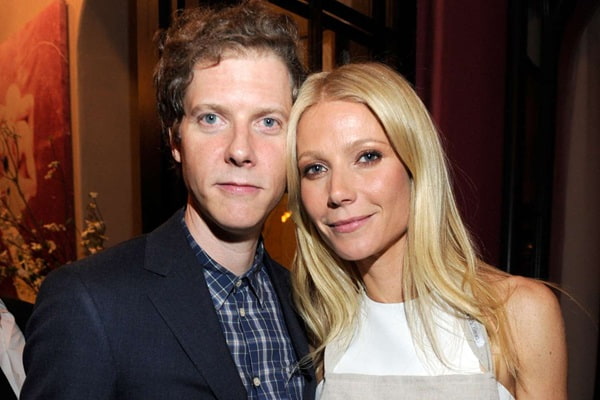
Jake Paltrow is an American film director, screenwriter, and producer born on September 26, 1975, in Los Angeles, California. He is the younger brother of Oscar-winning actress Gwyneth Paltrow, the son of television director and producer Bruce Paltrow and actress Blythe Danner, and one of the most thoughtfully unconventional filmmakers working in American independent cinema today. His feature directorial credits include The Good Night (2007), Young Ones (2014), the acclaimed documentary De Palma (2015) co-directed with Noah Baumbach, and June Zero (2022), a Hebrew-language historical drama about the execution of Nazi war criminal Adolf Eichmann that premiered at the Karlovy Vary International Film Festival.
He is considerably less famous than his sister. He has made that choice deliberately. And the work he has produced across three decades behind the camera is more interesting for it.
Early Life: The Downtown New York Kid Who Watched B-Movies Alone
Jake Paltrow was born Jacob Danner Paltrow in Los Angeles, but the defining years of his childhood were spent in New York City. His family relocated from Santa Monica to Manhattan when he was approximately seven years old. His full name reflects both sides of his family: Danner is his mother Blythe Danner’s maiden name, carried forward as his middle name.
He attended Saint David’s School in New York City as a young student. His secondary education took place at the Crossroads School for Arts and Sciences, the progressive Los Angeles school that has educated a remarkable concentration of entertainment industry children.
By his own description, he was a self-described loner in his youth. He spent most Saturday nights watching B-grade horror movies rather than socializing. That solitary, observational quality, sitting alone in the dark watching how images and sound create feeling, was an early form of the education that would define his career.
His summers were spent watching his mother perform at the prestigious Williamstown Theatre Festival in Massachusetts. His parents, whom he has described as downtown theater people, introduced their children to show business in what he called a healthy way, focusing on the craft rather than the fame. That distinction between craft and celebrity became a defining principle of his professional identity.
Family: A Creative Dynasty With Deep Roots
Understanding Jake Paltrow’s biography requires understanding the family that shaped him, because unlike many children of famous parents who spend their careers escaping that context, he has explicitly embraced and built upon it.
Bruce Paltrow: The Father He Followed
His father, Bruce Paltrow, was a successful television director and producer whose work defined a generation of prestigious American television drama. He created and produced The White Shadow on CBS from 1978 to 1981 and St. Elsewhere on NBC from 1982 to 1988. Both shows were critically celebrated, dramatically ambitious, and significantly ahead of their time in terms of storytelling sophistication and moral complexity.
Bruce Paltrow was also Jewish, and Jake had a Bar Mitzvah. That Jewish heritage played a direct role in the creative interests that eventually produced June Zero.
Jake has spoken specifically about how his father shaped his understanding of cinema: “My dad and I talked a lot about movies, mostly about movies that had been made more than movies we were making.” That relationship, talking about existing films rather than dreaming of future productions, is the foundation of a director whose work is deeply informed by film history.
Bruce Paltrow died on October 3, 2002, from pneumonia, a complication related to oral cancer. He was 58. His death came while he and the family were in Rome celebrating Jake’s sister Gwyneth’s birthday. The loss of his father while Jake was in his late twenties, just as his career was beginning to take shape, was a significant biographical event. His interest in World War II history and Jewish heritage, which ultimately produced June Zero, developed in part through conversations with his father.
Blythe Danner: The Mother Who Defined the Stage
His mother, Blythe Danner, is a Tony Award-winning stage actress and acclaimed screen performer with credits spanning decades. Her presence at Williamstown every summer exposed Jake to serious theatrical craftsmanship from childhood. She has appeared in numerous films and television series, most notably in the Meet the Parents franchise as Barbra Streisand’s counterpart.
Gwyneth Paltrow: The Famous Sister Who Appeared in His First Film
Gwyneth Paltrow is Jake’s older sister, born September 27, 1972. She won the Academy Award for Best Actress for Shakespeare in Love in 1999 and has built one of the most diversified entertainment and wellness business empires of any actress of her generation through the Goop brand.
Jake has always maintained a quietly distinct professional identity from Gwyneth. Rather than trading on the name’s associations with her fame, he has built a reputation based entirely on his own work and taste. Gwyneth appeared in his debut feature The Good Night, but the relationship between them professionally is one of genuine sibling support rather than strategic co-branding.
The Extended Family: Katherine Moennig and Gabby Giffords
Jake Paltrow’s family connections extend beyond the immediate household in ways that rarely appear in coverage of him. He is a half first cousin of actress Katherine Moennig, best known for her role in The L Word. He is also a second cousin of former United States Congresswoman Gabrielle Giffords, who survived an assassination attempt in 2011 and became a nationally recognized figure in the gun control advocacy movement. These connections reflect the breadth of a family that spans entertainment, politics, and public service.
Personal Life: Taryn Simon and a Quiet New York Existence
In 1999, Jake Paltrow met photographer and conceptual artist Taryn Simon. They married in 2010 and have two children together. They are based in New York.
Taryn Simon is a significant figure in the contemporary art world. Her work combines photography, text, and graphic design in large-scale projects that examine institutional power, legal systems, and human identity. She has exhibited at the Museum of Modern Art in New York, the Tate Modern in London, and major institutions globally. The relationship between a filmmaker and a conceptual artist who both work with image, narrative, and institutional critique has an obvious intellectual coherence.
Jake Paltrow maintains a notably low public profile for someone from his family background. He does not participate in the celebrity media ecosystem his sister inhabits. His public statements come almost exclusively in the context of his films, in interviews with film publications and festival press. This deliberate privacy is consistent with his stated values about prioritizing craft over fame.
Career: Three Decades Behind the Camera
The Early Years: Production Assistant to Television Director
Jake Paltrow began his career in 1994 as a production assistant on the NBC crime drama Homicide: Life on the Street, one of the most critically respected police procedurals in television history. That same year, he worked on the Hughes Brothers’ film Dead Presidents as a production assistant.
These starting roles were not glamorous. They were the foundational work of someone learning the entire machinery of film and television production from the ground up, consistent with a philosophy of craft-first that he has maintained throughout his career.
He quickly moved from production assistant to developing his own screenwriting. His short film An Eviction Notice, made in 1995, demonstrated enough ability that he was hired by DreamWorks Pictures to write an original screenplay titled The Modern Machine, a story about a teenager’s love for and obsession with an artificially intelligent being. This was in the mid-1990s, making it a prescient premise for its moment.
He then wrote screenplays for two high-profile unproduced adaptations: a version of Chuck Palahniuk’s novel Survivor for Fox 2000, and an adaptation of Donna Tartt’s literary novel The Secret History for Warner Bros. and Miramax. Neither screenplay reached production. The experience of investing significant creative energy in adaptations that never got made is one that shapes many screenwriters’ relationship with original material, and Jake’s subsequent career has been defined almost entirely by original stories or unconventional approaches to existing material.
Television Directing: NYPD Blue and the Major Leagues
Following in his father’s footsteps as a television director, Jake Paltrow began directing hour-long dramas in the late 1990s. His most significant early television work was on NYPD Blue, the acclaimed ABC crime drama created by Steven Bochco and David Milch. He directed multiple episodes across seven seasons, working under the mentorship of Bochco, Milch, and producer Mark Tinker.
NYPD Blue in this period was one of the most prestigious directing assignments available in American television drama. The show was known for its long, uninterrupted takes, its naturalistic performance style, and its willingness to handle mature and morally complex material. Directing seven seasons of episodes was a genuine professional education.
He also directed for The Others on NBC in 2000, The Jury on Fox in 2004, and later for two of the most celebrated prestige dramas of the next decade: Boardwalk Empire on HBO, for which he received an Emmy Award nomination for his directing work, and Halt and Catch Fire on AMC.
The Good Night (2007): The Feature Debut at Sundance
The origin of The Good Night, Jake’s feature writing and directing debut, was characteristic. He has described waking up one morning in 2005 with a clear idea for a story: a man searching for perfection in a world where life rarely measures up to his idealized images. The idea connected with something he understood personally about the gap between expectation and reality.
The Good Night is a romantic comedy that blurs the line between fantasy and waking life. It stars Martin Freeman as Gary, a musician in a creatively stagnant relationship with his girlfriend Dora, played by Gwyneth Paltrow. When Gary begins lucid dreaming about an idealized woman named Anna, played by Penélope Cruz, the dreams become more compelling than his reality. Danny DeVito appears as a lucid dreaming guru. Simon Pegg plays Gary’s friend.
The cast is extraordinary for a debut feature. The film premiered at the Sundance Film Festival in 2007 and received a limited art house release in the United States. Critics recognized its ambition and its unusual emotional texture even if its reception was uneven. The experience of assembling a cast of that caliber and bringing a surrealist premise to a coherent emotional conclusion established Jake as a filmmaker with genuine range.
Young Ones (2014): Science Fiction as Western
Young Ones is the film that most clearly demonstrates Jake Paltrow’s willingness to work in genre without surrendering his interest in intimate human drama. Set in a near-future American west devastated by drought, the film is a science fiction Western with the structure of a classic revenge narrative. Michael Shannon plays Ernest Holm, a farmer struggling to protect his family and his water rights against a ruthless land thief played by Nicholas Hoult. Kodi Smit-McPhee plays Ernest’s son, Jerome.
The film screened at the Sundance Film Festival and had its international premiere in the Bright Future section of the International Film Festival Rotterdam. It received a Sitges Film Festival Best Screenplay award for Jake’s writing, his first major international screenplay recognition.
Young Ones is ambitious in its visual language, shot by Giles Nuttgens with a deliberately classic scope that references both classic Western photography and science fiction production design without fully committing to either. It is the film in his catalog that most clearly shows his capacity for commercial genre filmmaking, and also the film most consistently cited by critics as evidence of an underdeveloped talent that Hollywood has not yet found the right framework to fully deploy.
De Palma (2015): The Documentary That Defined a Friendship
In 2015, Jake Paltrow co-directed with Noah Baumbach one of the most celebrated film documentaries of the decade: De Palma, a feature-length portrait of director Brian De Palma that consists almost entirely of the director sitting in front of a camera and talking about his life and work.
The film had its world premiere at the 72nd Venice Film Festival, screening out of competition. It holds a 95% approval rating on Rotten Tomatoes based on 112 reviews and an 83 out of 100 score on Metacritic. The site’s consensus describes it as a film that will fascinate De Palma’s longtime fans and likely draw in skeptics through the sheer entertainment value of his storytelling.
The friendship between Jake Paltrow and Noah Baumbach is one of the more interesting creative relationships in contemporary American independent film. Both men grew up in households where cinema was discussed seriously and constantly. Both chose to become filmmakers rather than actors despite growing up surrounded by performers. Both have built careers defined by an evident love of film history and a commitment to personal storytelling that resists easy commercial categorization.
Jake has described his response to De Palma’s body of work in terms that illuminate his own filmmaking philosophy: “There’s only a few of those, that are really in the fabric of the sense memory of what a movie even is, and I think that Brian is, if not the main one, one of those few directors who you know automatically, this is what a movie feels and breathes and looks like.”
June Zero (2022): The Most Ambitious Film of His Career
June Zero is Jake Paltrow’s most formally and thematically ambitious film. Shot on 16mm film in Israel and Ukraine before the wars in both countries, entirely in Hebrew, the film approaches one of the most documented events in Israeli history from a radically peripheral perspective.
The story of how the film came to exist is itself revealing. Paltrow came across a detail about the execution of Adolf Eichmann in 1962: that no Ashkenazi Jewish guards were permitted to work at the prison while Eichmann was held there. Following that thread, he discovered that a portable cremation oven had been secretly constructed to incinerate Eichmann’s body immediately after his execution, so that his remains could not become a shrine for neo-Nazis. He found that a young boy, an immigrant from Libya, had worked at the factory where the oven was built.
That detail, the oven, the young boy, the peripheral figures managing the mechanics of historical judgment, became the organizing principle of the entire film. As he told one interviewer: “I wanted to kill him.” In the best possible sense.
The film unfolds in three interlocking perspectives: David, a 13-year-old Libyan immigrant who works at the oven factory and slowly understands what the oven will be used for; Hayim, a Moroccan Jewish guard assigned to protect Eichmann from vigilante justice specifically because European Jews were Hitler’s primary targets; and Micha, a Polish Auschwitz survivor who became the chief interrogator of the Eichmann trial.
Eichmann himself appears only in glimpses, seen from behind. The film refuses to make him the subject. He is instead the gravitational force around which ordinary people are pulled into contact with history.
Jake co-wrote the screenplay with Israeli filmmaker Tom Shoval. He described the challenge of directing in a language he was not fully fluent in but said the learning curve was less steep than expected. By the time of rehearsals he could understand enough to work effectively.
The film premiered at the Karlovy Vary International Film Festival in July 2022, screened at the New York Jewish Film Festival at Lincoln Center, and was released in the United States by Cohen Media Group in June 2024. A screening series at New York’s Quad Cinema, programmed by Jake himself and titled Origin Stories: Jake Paltrow’s Notes on June Zero, featured seven films that influenced the making of the film, including works by Milos Forman and Abbas Kiarostami.
June Zero received a standing ovation at its premiere and has been described by critics as a formally rigorous and emotionally resonant contribution to the canon of Holocaust-related cinema, distinguished by its insistence on telling the story through people who were adjacent to history rather than central to it.
Also Read : Eloise Christina Schwarzenegger Pratt: The Complete Biography
Complete Filmography
Feature Films as Director:
- The Good Night (2007), writer and director, Sundance premiere
- Young Ones (2014), writer and director, Sundance and Rotterdam premieres, Sitges Best Screenplay award
- De Palma (2015), co-director with Noah Baumbach, Venice Film Festival premiere, 95% Rotten Tomatoes
- June Zero (2022), director, co-writer with Tom Shoval, Karlovy Vary premiere, US release 2024
Short Films:
- An Eviction Notice (1995), director and writer
Television Directing:
- Homicide: Life on the Street (1994), production assistant
- NYPD Blue (1999 to approximately 2005), director, seven seasons
- The Others (NBC, 2000), director
- The Jury (Fox, 2004), director
- Boardwalk Empire (HBO), director, Emmy Award nomination
- Halt and Catch Fire (AMC), director
Unproduced Screenplays:
- The Modern Machine (DreamWorks Pictures)
- Survivor, adaptation of Chuck Palahniuk’s novel (Fox 2000)
- The Secret History, adaptation of Donna Tartt’s novel (Warner Bros. and Miramax)
What Makes Jake Paltrow Significant
The question of why Jake Paltrow matters to anyone who is not already a dedicated follower of independent film is worth addressing directly.
Most directors who come from his background, famous family, access to industry relationships, education at an elite arts school, end up working in mainstream commercial cinema or using their connections to produce work that would not exist without those connections. Jake Paltrow has consistently done the opposite.
His films are set in near-future dust bowls, 1960s Israel, the dream life of a creatively stagnant musician, and the late-night conversations of a legendary filmmaker. They are shot on 16mm. They are in Hebrew. They star Michael Shannon and are sold to art house distributors. They premiere in Venice and Karlovy Vary rather than at the major commercial film festivals.
This is not indifference to success. It is a specific and coherent set of creative choices made by someone who had, and has, other options. He has described his interest in personal stories placed in settings that do not have to be rigidly bound by reality. That is the consistent artistic logic connecting The Good Night’s dream sequences, Young Ones’ speculative future, and June Zero’s peripheral perspective on a historical event.
He is, in the most meaningful sense of the word, a filmmaker rather than a director for hire. The distinction matters.
Frequently Asked Questions
Who is Jake Paltrow?
Jake Paltrow is an American film director, screenwriter, and producer born September 26, 1975, in Los Angeles. He is the younger brother of actress Gwyneth Paltrow and the son of television director Bruce Paltrow and actress Blythe Danner. His feature films include The Good Night, Young Ones, the documentary De Palma co-directed with Noah Baumbach, and June Zero.
Is Jake Paltrow related to Gwyneth Paltrow?
Yes. Jake Paltrow is Gwyneth Paltrow’s younger brother. They share the same parents, television director Bruce Paltrow and actress Blythe Danner. Gwyneth appeared in Jake’s debut feature The Good Night in 2007. Despite their shared family background, Jake has built a deliberately distinct professional identity as a filmmaker rather than an actor.
What is Jake Paltrow best known for directing?
He is best known for the documentary De Palma (2015), co-directed with Noah Baumbach, which holds a 95% rating on Rotten Tomatoes and premiered at the Venice Film Festival. He is also known for June Zero (2022), a Hebrew-language historical drama about the Eichmann execution that premiered at Karlovy Vary, and Young Ones (2014), a science fiction Western starring Michael Shannon.
What is June Zero about?
June Zero is a 2022 Hebrew-language historical drama directed by Jake Paltrow and co-written with Israeli filmmaker Tom Shoval. Set in 1962 Israel, it explores the execution of Nazi war criminal Adolf Eichmann through three peripheral perspectives: a young Libyan immigrant who worked at the factory where Eichmann’s cremation oven was built, a Moroccan Jewish prison guard, and a Polish Auschwitz survivor who served as Eichmann’s chief interrogator. The film screened at Karlovy Vary, the New York Jewish Film Festival, and was released in the US in 2024 by Cohen Media Group.
Who is Jake Paltrow married to?
Jake Paltrow married conceptual artist and photographer Taryn Simon in 2010. They have two children together and are based in New York City. Taryn Simon is a significant figure in the contemporary art world whose work has been exhibited at MoMA, the Tate Modern, and other major international institutions.
Did Jake Paltrow direct any television shows?
Yes. He has an extensive television directing career including seven seasons of NYPD Blue on ABC, for which he worked under the mentorship of creators Steven Bochco and David Milch. He also directed for Boardwalk Empire on HBO, for which he received an Emmy Award nomination, and for Halt and Catch Fire on AMC.
What is the documentary De Palma about?
De Palma is a 2015 documentary co-directed by Jake Paltrow and Noah Baumbach in which filmmaker Brian De Palma sits in front of a camera and discusses his entire career and life in a single extended interview. The film premiered at the Venice Film Festival and holds a 95% approval rating on Rotten Tomatoes. It is widely regarded as one of the finest documentary portraits of a filmmaker ever made.
How did Jake Paltrow start his career?
He began as a production assistant in 1994 on Homicide: Life on the Street and on the Hughes Brothers film Dead Presidents. He then wrote screenplays for DreamWorks, Fox 2000, and Warner Bros. before transitioning into television directing, most significantly on NYPD Blue where he directed across seven seasons. He made his feature debut with The Good Night, which premiered at Sundance in 2007.
What is Jake Paltrow’s connection to Noah Baumbach?
Jake Paltrow and Noah Baumbach are close friends who share a deep interest in cinema history and a similar trajectory as children of entertainment industry parents who chose directing over acting. Their friendship produced the documentary De Palma (2015), widely considered one of their most significant collaborative achievements. Both men come from backgrounds where cinema was discussed seriously at home.
What is Jake Paltrow’s relationship with his father Bruce Paltrow’s legacy?
Bruce Paltrow was a significant influence on Jake’s career. Jake has explicitly described following in his father’s footsteps as a television director rather than his mother’s and sister’s path as actors. The conversations they shared about film history shaped his aesthetic education. His interest in Jewish history and World War II, which produced June Zero, also developed through his relationship with his father, who died in October 2002.
Conclusion
Jake Paltrow is the rare filmmaker whose biography is most interesting not for its famous family connections but for the specific choices he has made in spite of them.
He grew up as the son of a celebrated television director and a Tony Award-winning actress, the younger brother of an Oscar-winning star. He could have leveraged those connections into a mainstream directing career with studio films and commercial television. He chose instead to direct seven seasons of a prestige police drama, write unproduced adaptations of literary novels, make a debut feature about a man who prefers his dreams to his life, produce a science fiction Western about drought and family loyalty, sit in a room with Brian De Palma and his old friend Noah Baumbach to make one of the finest filmmaker portraits in documentary history, and then spend years developing a Hebrew-language film about the execution of a Nazi war criminal told from the perspective of a teenage immigrant and an oven.
That is not a career shaped by famous connections. That is a career shaped by genuine curiosity, serious cinematic education, and the willingness to follow a creative instinct wherever it leads regardless of whether it leads somewhere commercially obvious.