
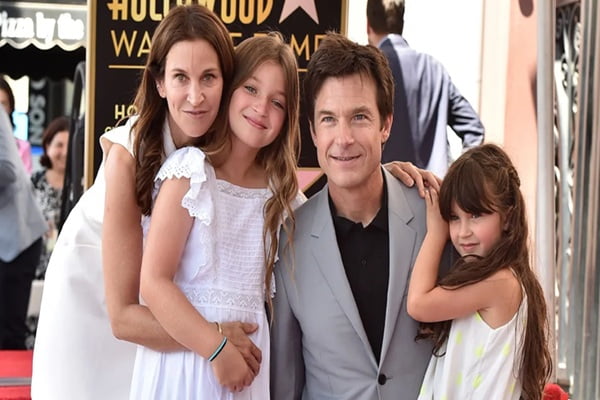
Kent Bateman, born Bruce Kent Bateman on October 23, 1936, in Salt Lake City, Utah, is an American film director, producer, screenwriter, actor, theatre director, personal manager, and entertainment methodology educator whose career spans more than four decades across independent cinema, network television, live theatre, talent management, and academic instruction. He is most widely recognized as the father of actors Jason Bateman and Justine Bateman, but his own professional story is substantially richer and more varied than that parenthetical role suggests.
He directed one of the most unusual horror films of the early 1970s exploitation era. He produced the original Grizzly Adams project that launched a television franchise. He directed network television drama and comedy throughout the 1980s. He founded two theatre companies in two different cities. He managed one of Hollywood’s most celebrated stuntmen. He developed and published an original storytelling methodology that he taught at New York University, at a Singapore media convention, and in workshops across Europe. He is, in the fullest sense of the term, a career creative professional who chose depth of engagement over the narrower but more lucrative path of specialisation.
Early Life: Utah, New England, and a Life in the Theatre
Kent Bateman was born in Salt Lake City, Utah, on October 23, 1936. His patrilineal ancestry traces to Thomas Bateman Jr. and Mary Street Bateman of Salford, Lancashire, England, indicating a family with roots in the industrial north of England that eventually made its way across the Atlantic and westward across America.
He married Victoria Elizabeth Bagg. Together they had two children who would both become prominent figures in American entertainment: Justine Bateman, born February 19, 1966, who became widely recognised for her role as Mallory Keaton in the NBC sitcom Family Ties, and Jason Bateman, born January 14, 1969, who built one of the most consistently successful dual acting and directing careers of his generation through Arrested Development, Ozark, and a substantial film catalog.
Kent Bateman’s first significant professional foothold came as a film producer for Ealing Films, an American independent company not to be confused with the British Ealing Studios of the same era, operating in Newton, Massachusetts, in the late 1960s and early 1970s. That New England production environment, geographically and culturally distant from the Hollywood studio system, shaped his instinct for independent, self-determined filmmaking that would define his entire career.
The Headless Eyes (1971): An Exploitation Horror Debut Unlike Any Other
In 1971, Kent Bateman wrote, directed, and produced his debut feature film, The Headless Eyes. Shot on a minimal budget in New York City, the film follows a deranged artist who, after suffering the traumatic loss of one of his own eyes, begins a killing spree in which he gouges out the eyes of his victims and uses them as raw material for his work.
The film is an artefact of a very specific American independent cinema moment. The early 1970s New York exploitation scene, operating outside any studio framework and often without the commercial infrastructure of distribution or marketing, produced a body of work that was raw, unpolished, and frequently genuinely disturbing. The Headless Eyes sits within that tradition. Critics and historians of exploitation cinema have noted its unusual psychological texture alongside its graphic content: it is not merely a gore film but an attempt, however imperfect within its severe budget constraints, to make a statement about the relationship between artistic obsession, violence, and the human compulsion to create.
For a first feature, it demonstrated Bateman’s willingness to work in unconventional material and to manage every creative dimension of a production simultaneously, a skill set that would serve him throughout a career defined by independence from studio infrastructure.
The Grizzly Adams Origin Story: Directing a Television Franchise Before It Was One
One of the most significant and least discussed elements of Kent Bateman’s career is his role in originating the Grizzly Adams franchise.
According to his professional biography published on Voice123, in 1971 he directed the original Grizzly Adams for Sun Classic Pictures. That production became the foundation for The Life and Times of Grizzly Adams, the television series that aired on NBC from 1977 to 1978, drawing substantial audiences and becoming a beloved piece of American family television in its era.
The significance of this credit is that it places Kent Bateman at the origin point of a franchise that far outgrew his direct involvement. The commercial and cultural success of Grizzly Adams as a television property was built on a foundation he helped establish. That his contribution is largely absent from mainstream coverage of the franchise is characteristic of how independent filmmakers who originate properties often see their formative roles obscured by the commercial machinery that follows.
Land of No Return (1978): William Shatner, Mel Torme, and Alaskan Wilderness
Following the Grizzly Adams work, Bateman wrote, directed, and produced Land of No Return, a 1978 adventure drama released as Snowman in some markets. The film stars Mel Torme as Zak O’Brien, an animal trainer whose plane crashes in the Utah or Alaskan wilderness, forcing a survival ordeal against harsh environmental conditions. William Shatner appears in the film, and Donald Moffat also has a role.
The film reflects the adventure and wilderness survival genre that was commercially viable in American independent cinema through the 1970s, following the cultural appetite for stories about humans pitted against natural environments that had been fed by the success of films like Deliverance earlier in the decade. Bateman’s ability to attract recognizable talent including Shatner and Torme to a modest-budget independent production indicates both his industry relationships and his persuasiveness as a creative leader.
The Rogue and Grizzly (1982): Continuing the Wilderness Tradition
The Rogue and Grizzly in 1982 continued Bateman’s interest in adventure and wilderness survival narratives. The film extended his established pattern of working in genres that combined action, natural environments, and human drama within the practical constraints of independent production budgets.
Television Career: From NYPD Dramas to Family Sitcoms
Through the late 1970s and 1980s, Kent Bateman extended his career from independent film production into network television, a transition that required adapting his independent filmmaking instincts to the industrial rhythms of episodic production.
His television directing credits include episodes of Family Ties in 1987, the NBC sitcom that starred Michael J. Fox and that also featured his daughter Justine Bateman as Mallory Keaton. He directed multiple episodes of The Hogan Family from 1988 to 1991, the NBC sitcom that was later retitled after its original star Valerie Harper departed, and in which his son Jason Bateman appeared as Mark Foster from 1986 to 1991.
The intersection of his television directing career with his children’s acting careers created an unusual professional family dynamic. He was simultaneously a television director working for production companies and a father whose children were regulars on the most prominent shows of the era. He also produced and directed for Real People, That’s Incredible, and That’s My Line during this period, reflecting a range that extended from dramatic episodic work to variety and reality-adjacent programming.
His executive producing credit on Teen Wolf Too in 1987, the fantasy comedy sequel starring his son Jason as Todd Howard, the college student who discovers his werewolf heritage, demonstrated his capacity to operate in the feature film space while simultaneously maintaining his television career. Teen Wolf Too was produced for Atlantic Films and placed him as an executive force behind one of the major commercial projects of Jason’s early career.
He also executive produced Moving Target in 1988, an NBC Movie of the Week that starred Jason Bateman, and produced Breaking the Rules in 1992 for Miramax, in which he also appeared as an actor playing Mr. Stepler, one of his few on-screen roles.
Theatre: Two Companies, Three Cities, Multiple Award-Winning Productions
One of the most substantive and least documented dimensions of Kent Bateman’s career is his work as a theatre director and company founder.
In Los Angeles, he founded Theatre III Group, a company under which he directed thirteen productions. Among them was the world premiere of Invitation From The Asylum by playwright Roger O. Hirson, which earned three Drama-Logue Awards including one for Outstanding Direction. Drama-Logue Awards were the most significant recognition in Los Angeles theatre during this period, and an Outstanding Direction award for a world premiere production represents genuine artistic credibility within that community.
In 1984, he directed Jason and Justine Bateman in their professional stage debut, a revival of Roger O. Hirson’s play Journey To the Day. For Jason in particular, this stage debut at age fifteen, directed by his father in a production that also featured his older sister, was his first professional performing experience, preceding by two years the television work that would make him famous.
In 1991, after relocating from Los Angeles to Park City, Utah, he created Actors Repertory Theatre. During 1994, the company performed at Wolf Mountain Resort, later known as The Canyons, in Park City. This Park City company reflected a commitment to maintaining a live theatre presence in a community that is most internationally recognized for the Sundance Film Festival rather than for year-round theatrical programming.
He also directed a second production of Bench at the Edge by Luigi Jannuzzi at his Park City company. The first production had been at Theatre III in Los Angeles. The surreal black comedy explores a comatose man’s hallucinatory experiences at the edge of an abyss, observing suicides and reflecting on the value of life through loss. He subsequently co-wrote, produced, and directed a feature film adaptation of Bench at the Edge in 1998, his final feature directorial credit to date, completing a journey that took the material from Los Angeles theatre stage to Park City stage to independent film.
Talent Management: Dar Robinson, Jason Bateman, and Justine Bateman
During the peak years of his career, Kent Bateman served as personal manager to three clients whose careers were each significant in different ways.
Dar Robinson was one of the most celebrated stunt performers in Hollywood history. Known for record-breaking stunts including a 220-foot free fall from the CN Tower in Toronto for the film Highpoint, Robinson died in November 1986 following a motorcycle accident during filming in Arizona. He was 39. Kent Bateman served as his personal manager through the height of his career, placing him in an advisory role to one of the industry’s most genuinely exceptional physical performers.
He managed both Jason and Justine Bateman through their formative years, providing not just professional guidance but direct family involvement in the development of their careers. Jason has noted that his father managed his career until he was 20 years old, when the professional relationship was dissolved by mutual agreement. That management relationship, navigating the career of a child actor who began appearing in television commercials at age eleven and was a series regular by fourteen, required a particular kind of dual engagement between paternal responsibility and professional obligation.
The VPOV and AFL Methodologies: Teaching Storytelling at NYU and Beyond
Perhaps the most distinctive and genuinely unusual element of Kent Bateman’s career is his development of two original storytelling and character-building methodologies, which he has taught in academic and professional settings across multiple continents.
The methodologies, trademarked as VPOV (Branded Entertainment) and AFL, represent his attempt to codify the principles he developed across four decades of working in theatre, film, and television into transmissible frameworks for storytelling, character construction, and entertainment branding. He taught VPOV at New York University, one of the world’s most respected film and media programmes.
His academic and professional outreach extended significantly beyond New York. In 2001, he presented his methodology at a Singapore Media Convention, bringing his framework to Asian media professionals. In August 2002, he taught in Lisbon, Portugal, working with artists and television producers and executives from across Europe in an invited seminar format. His work was subsequently published in multiple languages, indicating that the methodologies found meaningful professional reception beyond the English-speaking market.
From 2004 to 2005, he completed an extended commission in Park City, Utah, working with Sundance-affiliated filmmakers and producers to create a repertory company with a mandate to develop programming for next-generation distribution platforms. This work, focused on the emerging digital distribution landscape more than fifteen years before streaming became the dominant medium of entertainment consumption, placed him at the intersection of traditional production expertise and forward-looking distribution thinking.
Also Read : Who Is Jake Paltrow? The Complete Biography of the Director Behind June Zero and De Palma
Complete Career Credits
Feature Film Director:
- The Headless Eyes (1971), director and screenwriter
- Land of No Return / Snowman (1977 or 1978), director, producer, and co-writer
- The Rogue and Grizzly (1982), director
- Bench at the Edge (1998), director, producer, and co-writer
Feature Film Producer:
- Teen Wolf Too (1987), executive producer
- Breaking the Rules (1992), producer
Television Director:
- Family Ties (1987), one episode
- The Hogan Family (1988 to 1991), multiple episodes
Television Producer:
- Moving Target, NBC Movie of the Week (1988), executive producer
- Real People, That’s Incredible, That’s My Line, producer and director
Theatre:
- Theatre III Group, Los Angeles: thirteen productions including world premiere of Invitation From The Asylum (three Drama-Logue Awards including Outstanding Direction)
- Actors Repertory Theatre, Park City, Utah: founded 1991
- Professional stage debut of Jason and Justine Bateman, Journey To the Day, 1984
- Bench at the Edge (two productions: Los Angeles and Park City)
Actor:
- Breaking the Rules (1992) as Mr. Stepler
- Additional minor acting credits including Death on Credit and Believe
Talent Management:
- Jason Bateman (to age 20)
- Justine Bateman
- Dar Robinson
The Family Context: Father of Two Generations of Hollywood Success
Kent Bateman’s relationship with his children’s careers is the lens through which most people encounter his name, and it is worth addressing directly and specifically rather than treating it as a footnote.
Jason Bateman has become one of the most consistently successful actors and directors of his generation. His work as Michael Bluth in Arrested Development is considered among the finest comic performances in American television history. His direction and performance in Ozark earned him a Golden Globe Award and a Primetime Emmy Award. He has directed feature films including Bad Words and The Family Fang. By any measure, he is one of the genuinely exceptional creative talents of his era.
Justine Bateman built a significant television career through Family Ties, became a technology entrepreneur and advocate during the early internet era, wrote the book Face about cultural attitudes toward women’s ageing, and directed her own feature films.
The fact that both children became not just actors but directors and creative leaders reflects something about the environment in which they were raised. Kent Bateman was not simply a father who happened to work in entertainment. He was a creative professional who directed his children on stage, managed their careers, and modeled a specific approach to creative work defined by independence, versatility, and a willingness to engage with every dimension of a production rather than specialising in any one role.
That is a particular kind of creative education, and its results are visible across two generations.
Frequently Asked Questions
Who is Kent Bateman?
Kent Bateman is an American film director, producer, screenwriter, theatre director, talent manager, and entertainment educator born on October 23, 1936, in Salt Lake City, Utah. He is best known as the father of actors Jason Bateman and Justine Bateman, but his own career spans forty-plus years across independent cinema, network television, live theatre, talent management, and academic instruction in storytelling methodology.
What is Kent Bateman famous for?
He is primarily recognized as the father of Jason and Justine Bateman, but his own work includes directing the cult exploitation horror film The Headless Eyes (1971), originating the Grizzly Adams project for Sun Classic Pictures, executive producing Teen Wolf Too (1987), directing episodes of Family Ties and The Hogan Family, founding two theatre companies in Los Angeles and Park City, and developing storytelling methodologies that he taught at NYU and at international media conferences.
Did Kent Bateman manage Jason Bateman’s career?
Yes. Kent Bateman served as Jason’s personal manager from the beginning of Jason’s career through approximately age 20, when their professional management relationship was dissolved by mutual agreement. He also managed Justine Bateman’s career and managed stuntman Dar Robinson until Robinson’s death in 1986.
What films did Kent Bateman direct?
His feature directorial credits include The Headless Eyes (1971), Land of No Return (1977 or 1978, also released as Snowman), The Rogue and Grizzly (1982), and Bench at the Edge (1998). He also originated the Grizzly Adams project for Sun Classic Pictures and directed episodes of Family Ties and The Hogan Family for network television.
What is Kent Bateman’s connection to Grizzly Adams?
According to his professional biography, Kent Bateman directed the original Grizzly Adams for Sun Classic Pictures in 1971. That production became the foundation for The Life and Times of Grizzly Adams television series that aired on NBC from 1977 to 1978 and became a significant commercial and cultural success in American family television.
What theatre work did Kent Bateman do?
He founded Theatre III Group in Los Angeles, under which he directed thirteen productions including the world premiere of Invitation From The Asylum, which earned three Drama-Logue Awards including Outstanding Direction. He later founded Actors Repertory Theatre in Park City, Utah, in 1991. He directed Jason and Justine Bateman in their professional stage debut in 1984 in Roger O. Hirson’s Journey To the Day.
What did Kent Bateman teach at NYU?
He developed two original storytelling and character-building methodologies, trademarked as VPOV (Branded Entertainment) and AFL, which he taught at New York University. He also presented these methodologies at a Singapore Media Convention in 2001, conducted seminars in Lisbon, Portugal, in 2002, and worked with Sundance-affiliated filmmakers in Park City from 2004 to 2005. His work was subsequently published in multiple languages.
Is Kent Bateman still active?
According to his Voice123 biography, he has continued producing motion pictures and developing television programming from New York City, as well as conducting seminars and online intensives using his VPOV and AFL storytelling methodologies. His most recent confirmed directorial credit is Bench at the Edge in 1998.
What is The Headless Eyes about?
The Headless Eyes is a 1971 exploitation horror film written, directed, and produced by Kent Bateman. Shot on a minimal budget in New York City, it follows a deranged artist who, after losing one of his own eyes in a traumatic incident, begins killing women and removing their eyes for use in his artwork. The film is considered an artefact of the early 1970s New York exploitation cinema scene.
Who are Kent Bateman’s children?
His two children are Justine Bateman, born February 19, 1966, an actress known for Family Ties who later became a technology entrepreneur, author, and filmmaker, and Jason Bateman, born January 14, 1969, an actor and director known for Arrested Development, Ozark, and numerous film credits, who won a Golden Globe and Emmy Award for his work in Ozark.
Conclusion
Kent Bateman is one of the more genuinely interesting figures in the supporting cast of American entertainment history, precisely because he is not easily categorised. He is not primarily a horror filmmaker, though he made one of the era’s more unusual exploitation films. He is not primarily a television director, though he directed across multiple successful network shows. He is not primarily a theatre director, though he founded two companies and directed award-winning stage productions. He is not primarily a talent manager, though he managed two significant careers from their inception. He is not primarily an academic, though he developed original methodologies that he taught at one of America’s most respected film programmes and at international media events.
He is all of these things across a career of more than four decades, connected by a consistent thread: an investment in storytelling craft above any single professional identity, and a willingness to follow creative instincts across whatever form those instincts suggested at any given moment.
The fact that his most famous contribution to American culture is the two children he raised and placed at the beginning of their own careers says something about how the entertainment industry assigns credit. Kent Bateman’s direct professional achievements are, on their own terms, substantial. That they are overshadowed by what he built in his family is perhaps the most fitting summary of a career defined by investment in other people’s potential.