
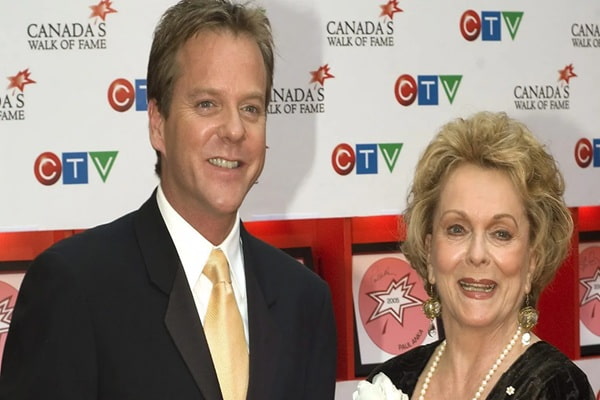
Shirley Douglas was not just an actress. She was not just an activist. And she was certainly not just the mother of Hollywood star Kiefer Sutherland. She was a force of nature who lived at the crossroads of art and politics for over six decades. Her story begins in a small prairie town in Saskatchewan and stretches to Hollywood, London, and the civil rights battlefields of the 1960s. Understanding her life means understanding modern Canada itself.
Who Was Shirley Douglas?
Shirley Douglas was a Canadian actress and political activist who refused to separate her art from her beliefs. She performed on stage, in films, and on television for more than sixty years. But she also marched for civil rights, supported the Black Panthers, and fought to protect public healthcare. She came from political royalty as the daughter of Tommy Douglas, the father of Canadian Medicare. Yet she built her own name through sheer talent and fearless conviction.
Early Life and Family Background
Shirley Jean Douglas was born on April 2, 1934, in Weyburn, Saskatchewan. Her father, Tommy Douglas, was a Baptist minister who became a legendary political figure. Her mother, Irma May Dempsey, provided a warm and structured home. Growing up, Shirley learned that politics was not a career. It was a moral obligation.
The Douglas household buzzed with debate about poverty, healthcare, and workers’ rights. Young Shirley absorbed these lessons while also developing a love for performance. She saw firsthand how her father used storytelling and passion to connect with ordinary people. That skill would later define her own career.
The Douglas Family Tree and Political Legacy
The Douglas family tree is deeply rooted in Canadian history. Tommy Douglas served as Premier of Saskatchewan and later led the federal New Democratic Party. His greatest achievement was bringing universal healthcare to Canada. That single accomplishment changed the country forever.
Shirley carried this legacy proudly but never rested on it. She understood that her father’s work was not finished. She spent her life advocating for the very principles he fought to establish. Her activism was not separate from her identity. It was the core of who she was.
Education at the Royal Academy of Dramatic Art
Shirley Douglas showed early promise as a performer. After attending school in Regina and studying at the Banff School of Fine Arts, she set her sights on London. She won a place at the prestigious Royal Academy of Dramatic Art, known as RADA.
She graduated in 1952 with classical training in voice, movement, and stagecraft. RADA gave her technical discipline and confidence. More importantly, it exposed her to global theatrical traditions. She returned to Canada ready to make her mark.
Early Acting Career and Return to Canada
Shirley began performing in England before moving back to Canada in the late 1950s. She made her film debut in “Joe MacBeth” in 1955. Throughout the 1960s, she built a reputation for intense, intelligent performances.
Critics praised her emotional depth and commanding stage presence. She worked constantly, moving between theatre, television, and film. Her talent was undeniable. But she never chased fame for its own sake. She saw acting as a way to explore human truth and challenge audiences.
Major Film Roles and Iconic Performances
Shirley Douglas appeared in several notable films, but two stand out. In 1962, she played Mrs. Starch in Stanley Kubrick’s “Lolita.” The role showed her sharp comedic timing and dramatic control. Then in 1988, she delivered a haunting performance in David Cronenberg’s “Dead Ringers.” She played the mother of conjoined twins, bringing deep sorrow and complexity to the role.
These performances proved her range. She could handle dark psychological drama and lighter material with equal skill. Directors trusted her because she came prepared and never hit a false note.
Television Success and Wind at My Back
For many Canadians, Shirley Douglas is best known for her television work. From 1996 to 2001, she played May Bailey on the beloved series “Wind at My Back.” The show followed a family during the Great Depression. Douglas brought warmth, strength, and quiet dignity to the role.
She also appeared on “Corner Gas,” “Flash Gordon,” and voiced characters on “Franklin.” Her television career spanned generations. Young viewers knew her voice from cartoons, while older audiences remembered her powerful dramatic work. Few actors achieve that kind of cross-generational reach.
Stage Legacy and Performing with Kiefer Sutherland
Theatre remained Shirley’s first love. She returned to the stage throughout her career, earning rave reviews for her intensity and precision. Her most memorable stage moment came in 1997. She starred alongside her son, Kiefer Sutherland, in “The Glass Menagerie” at Toronto’s Royal Alexandra Theatre.
That production was a family affair and a critical success. Mother and son shared the stage as mother and daughter in the play. Audiences felt the real connection between them. For Shirley, it was the perfect blend of her two greatest loves: acting and family.
Shirley Douglas as a Political Activist
Shirley Douglas did not just play activists on screen. She was one. Inspired by her father’s example, she dedicated herself to fighting injustice. In the 1960s, she became deeply involved in the civil rights movement in Los Angeles.
She supported the Black Panther Party, raising money for their children’s breakfast programs. She believed in their mission to empower Black communities. She also co-founded Performing Artists for Nuclear Disarmament. Her voice was loud, clear, and fearless. She never backed down from a fight she believed was right.
The 1969 Arrest and FBI Targeting
In 1969, Shirley Douglas was arrested and accused of attempting to buy hand grenades for the Black Panthers. She insisted the FBI framed her to discredit her father. She spent five days in jail before being released. The charges were eventually dismissed.
But the damage was real. She lost her U.S. work permit and was effectively deported. She returned to Canada in 1977. For decades, she spoke openly about being targeted for her political beliefs. The experience did not silence her. It made her more determined.
Healthcare Advocacy and Political Passion
Healthcare was personal for Shirley Douglas. Her father created Medicare. She saw it as a sacred trust. Throughout her life, she campaigned against privatization and fought to protect universal healthcare.
She worked with the Toronto Health Coalition and other advocacy groups. She gave speeches, wrote letters, and organized events. For her, healthcare was not a political talking point. It was a human right. She believed that no Canadian should go bankrupt because they got sick.
Marriage to Donald Sutherland and Family Life
Shirley Douglas married actor Donald Sutherland in 1966. They had twins, Kiefer and Rachel, in 1966. The marriage ended in divorce in 1970. Despite the split, both parents remained involved in their children’s lives.
Shirley raised Kiefer and Rachel largely as a single mother. She emphasized education, independence, and empathy. She did not push them toward show business. But she did teach them that art and activism could go hand in hand.
Raising Kiefer Sutherland and Rachel Sutherland
Kiefer Sutherland grew up watching his mother balance career, activism, and motherhood. He saw her face down the FBI and keep fighting. He learned that principles matter more than comfort.
Rachel Sutherland also pursued a career in film production. Both children inherited their mother’s work ethic and moral clarity. Shirley never forced her beliefs on them. She modeled them. That turned out to be far more powerful.
Relationship with Her Son Kiefer Sutherland
Shirley and Kiefer shared a deep bond. He often spoke of her influence on his life and career. When she died in 2020, he wrote a moving tribute. He called her an extraordinary woman who led an extraordinary life.
Their relationship was not without challenges. Shirley’s activism brought controversy and hardship. But Kiefer never wavered in his support. He understood that his mother’s courage came from a place of love. That love shaped the man he became.
Grandchildren and Continuing Legacy
Shirley Douglas was the grandmother of actress Sarah Sutherland, known for her role on the HBO series “Veep.” The artistic and activist legacy continues into the next generation.
Sarah has spoken about her grandmother’s influence. Shirley encouraged her to pursue meaningful work and stand up for what she believes. That guidance echoes through the family tree.
Lifestyle and Personal Values
Shirley Douglas lived a life of purpose, not luxury. She owned nice things but never flaunted them. Her home was filled with books, art, and lively conversation. She dressed elegantly but simply.
Her lifestyle reflected her values. She believed in community, compassion, and courage. She spent her money on causes, not status symbols. Friends described her as warm, funny, and fiercely loyal. She made time for people, not just events.
Physical Appearance and Presence
Shirley Douglas stood just 5 feet 2½ inches tall. But on stage, she filled a room. She had piercing blue eyes, blonde hair, and a voice that could shift from a whisper to a roar.
Her small stature never held her back. She used her physicality to create powerful characters. Directors and audiences forgot her height the moment she started performing.
What Was Shirley Douglas Net Worth?
At the time of her death in 2020, Shirley Douglas had an estimated net worth between $2 million and $4 million. She earned her money through decades of acting work, residuals, and voice projects.
She lived comfortably but not extravagantly. Her wealth reflected a steady, successful career rather than blockbuster fame. She prioritized financial independence so she could afford to take risks and speak her mind.
Awards and National Recognition
Shirley Douglas received numerous honors for her work. In 2003, she was named an Officer of the Order of Canada, one of the country’s highest civilian awards. She received a star on Canada’s Walk of Fame in 2004.
She also won a Gemini Award for Best Supporting Actress and received Queen Elizabeth II’s Golden and Diamond Jubilee Medals. Universities granted her honorary doctorates. These awards recognized both her art and her activism.
Later Life and Health Challenges
By 2009, Shirley Douglas faced serious health issues. A degenerative spinal condition limited her mobility. She began using a wheelchair. But she did not stop working or advocating.
She continued to speak out on healthcare and artists’ rights. She attended events and supported young performers. Her body slowed down, but her spirit never wavered.
Death and Passing in 2020
Shirley Douglas died on April 5, 2020, in Toronto. She was 86 years old. The cause was complications from pneumonia. Her son Kiefer confirmed that her death was not related to COVID-19.
He announced the news on Twitter, asking people to stay safe during the pandemic. Fans and colleagues flooded social media with tributes. Canada had lost one of its most passionate voices.
Public Reaction and Tributes
The response to Shirley Douglas’s death was immediate and emotional. Politicians, actors, and ordinary citizens shared memories. They remembered her fierce intelligence, her warm smile, and her unwavering principles.
The Canadian flag flew at half-mast on some government buildings. News programs ran special segments on her life. Her death felt like the end of an era. But her legacy had just begun.
The Power of Privacy in a Public Life
Shirley Douglas guarded her private life carefully. She gave interviews about her work and causes but rarely discussed her personal struggles. She did not use social media or seek constant attention.
This privacy was a deliberate choice. It allowed her to control her narrative and protect her family. In an age of oversharing, her restraint was powerful. She proved that you can change the world without putting your whole life on display.
Also Read : Mary Julia Koch: Heir, Journalist, and The Wall Street Journal Editor
Common Misconceptions About Shirley Douglas
Many people assume Shirley Douglas was famous only because of Kiefer Sutherland. That is backwards. She was already a celebrated actress and activist when he was born. Her career spanned decades before his began.
Others think her activism was extreme or fringe. In context, she was part of a broad movement for civil rights and social justice. History has largely vindicated her positions. She was on the right side of most major issues.
Shirley Douglas’s Influence on Canadian Culture
Shirley Douglas helped define what it means to be a Canadian artist. She proved that you could pursue international success while staying true to your roots. She showed that art and politics are not separate worlds.
Her commitment to public healthcare inspired generations of activists. Her acting inspired generations of performers. Few Canadians have left such a wide and deep mark on their country.
Final Thoughts on Her Lasting Success
Shirley Douglas succeeded on her own terms. She built a career that balanced commercial work with artistic integrity. She raised a family while changing the world. She faced down power and never flinched.
Her success was not measured in dollars or awards. It was measured in impact. She made Canada better. She made the entertainment industry better. She made her family stronger. That is a legacy worth studying.
Why Her Story Still Matters Today
Shirley Douglas’s life offers lessons for a confused age. She showed that conviction does not require cruelty. She proved that you can be both passionate and principled. She demonstrated that family and activism can coexist.
Young people looking for role models should study her example. She did not wait for permission. She did not ask for approval. She saw a problem and went to work. That is the definition of leadership.
Conclusion
Shirley Douglas was a remarkable woman who refused easy labels. She was an actress who took risks. She was an activist who faced consequences. She was a mother who raised a Hollywood star without losing herself.
Her story is not just about fame or politics. It is about integrity. She lived her values every single day. That is rare. That is worth remembering. And that is why, years after her death, we are still talking about Shirley Douglas.